
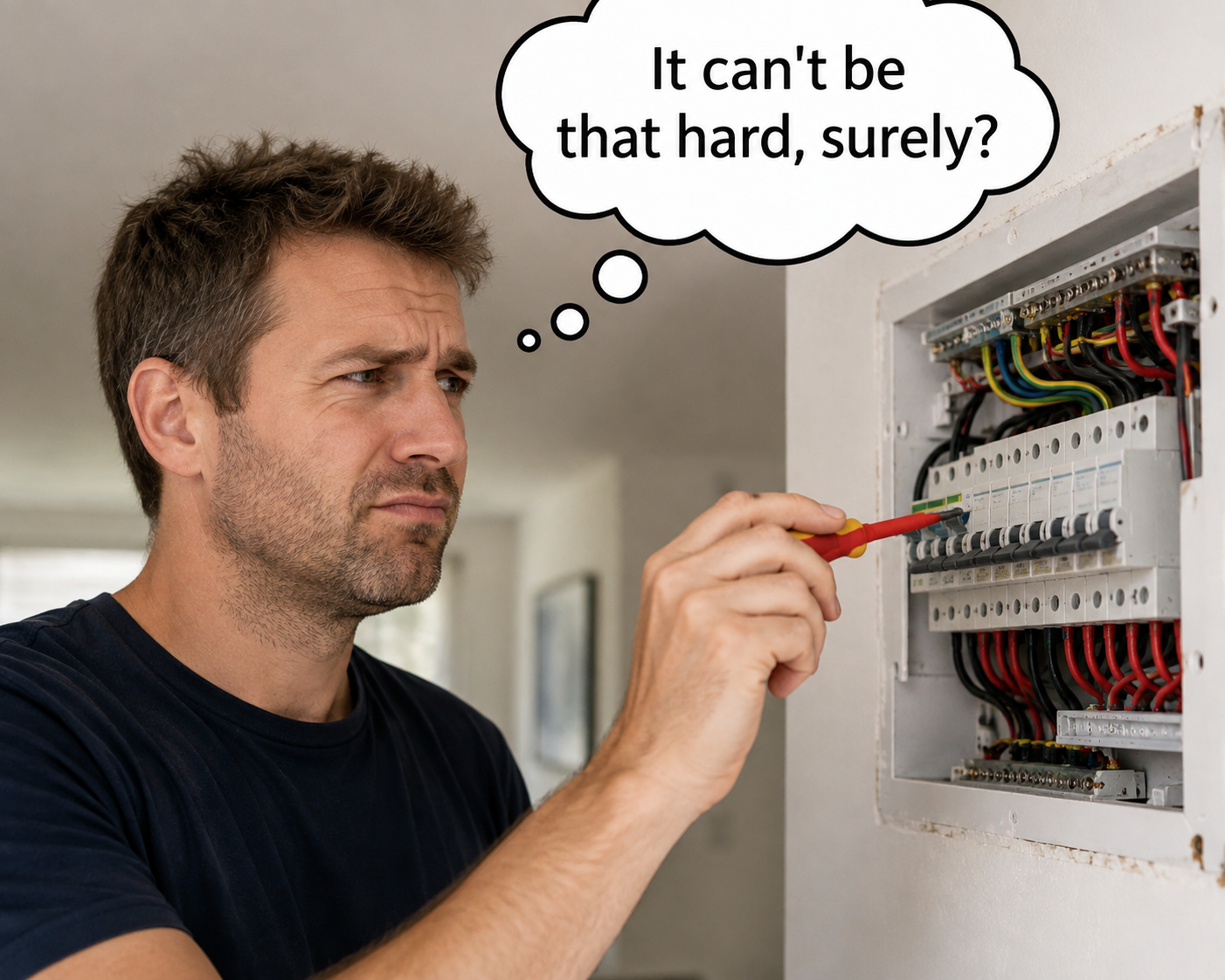
You Wouldn’t Attempt Your Own Electrical Work — So Why Risk Drafting Your Own Will!
Writing your own Will can seem like a smart way to save a few dollars, right up until it creates a legal headache for the people you leave behind.
While DIY Will kits and online templates make the process look easy, the reality is that estate law is full of technical rules, fine print, and traps for the inexperienced.
In many ways, drafting your own Will is like deciding to do your own electrical work after watching a couple of YouTube videos. Sure, changing a lightbulb is one thing, but rewiring the house is another story entirely. One wrong move with electricity can leave you sitting in the dark, or worse. One wrong clause in a Will can leave your family tangled in disputes, delays, and costly court battles.
The problem is that mistakes are often invisible until it’s too late. An electrician knows how to prevent dangerous faults before they happen. An estate lawyer knows how to spot issues that could make a Will unclear or even invalid, or expose it to a costly challenge. What looks simple on the surface can quickly become far more complicated once the “wires” are exposed.
Every state and territory has its own legislation governing the creation of a valid Will and these Acts of Parliament are extensive and complex. The reality is that preparing a Will is far more complicated than filling in a template and hoping for the best.
At the end of the day, there are some jobs worth leaving to the professionals. Most people wouldn’t risk burning down the house to save on an electrician, and risking your family’s future over a DIY Will may not be much different.