
Probate: The Legal Waiting Room Nobody Asked For
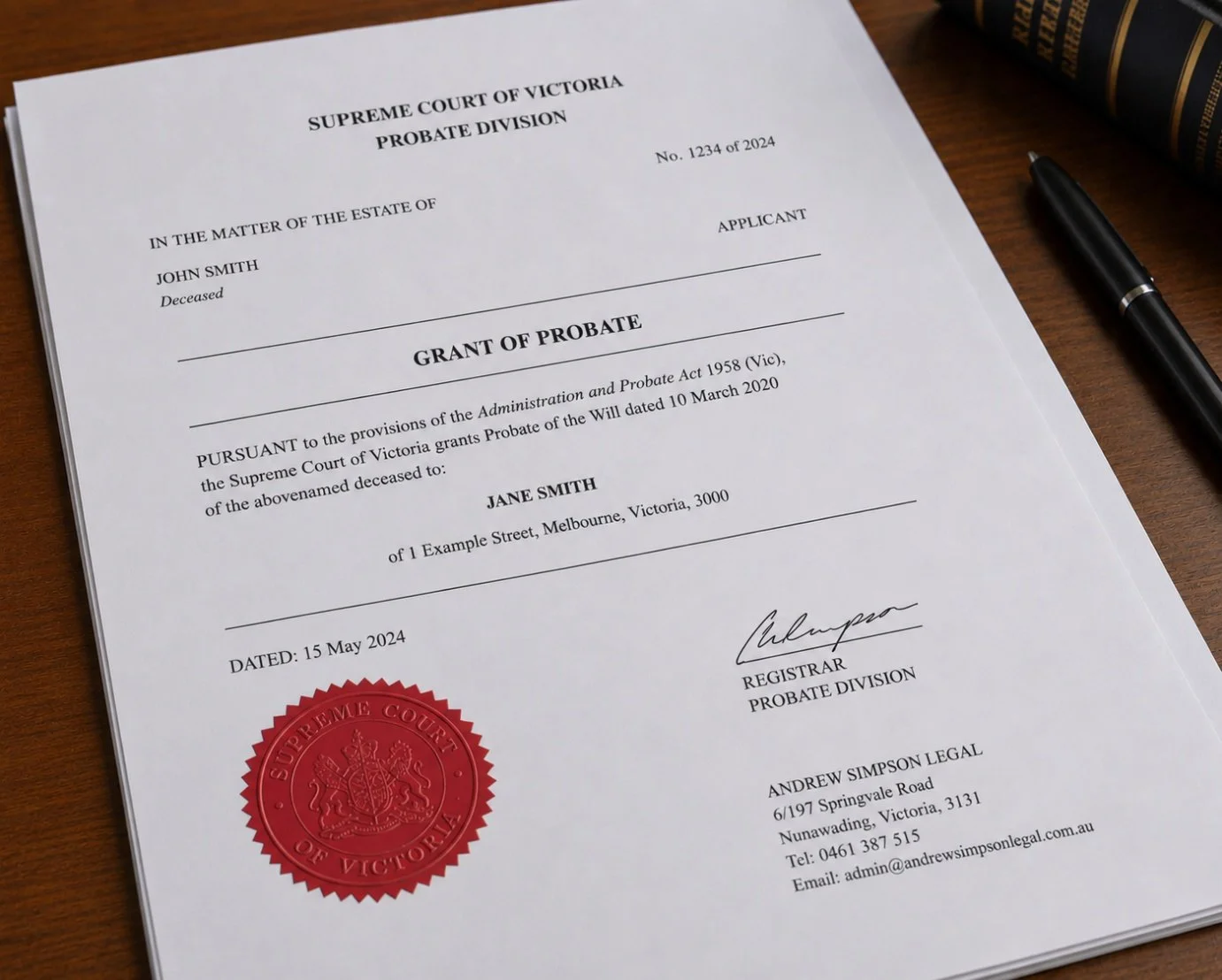
‘Probate’ sounds like something you’d need a lab coat for, but it’s actually the formal legal process that occurs at the start of an estate administration process. Think of it as the court’s ‘stamp of approval’, complete with paperwork, patience, and a surprising amount of waiting.
In simple terms, probate is the court’s way of confirming that a Will is valid and the executor is authorised to carry out its instructions (evidenced by a court order). If there’s no Will, the process still happens but it becomes slightly more like a group chat where nobody agrees on the plan.
What Actually Happens in Probate?
Once someone dies, in most (but not all) cases probate is required to:
Confirm that the Will is real and valid (not a cleverly doctored fake)
Identify a list of estate assets (money, property, mystery bank accounts) and estate liabilities
Formally enable the executor to start dealing with estate assets, including collection and distribution as per the Will.
Once probate has been obtained, the executor can then start the process of collecting the estate assets, paying the estate liabilities and distributing the estate in accordance with the Will.
Why Can it Take So Long?
Probate is not known for its speed. It moves at what legal professionals might call a “careful pace” and everyone else might call “why is this still not finished?”
Delays can happen because:
Paperwork is missing or is hard to find
There are multiple asset types, spread across different places
Banks and other institutions require extra verification (and more forms… always more forms!)
Someone inevitably says, “I thought this was already sorted”
When Probate Gets Spicy
Probate is usually boring, which is good. But it can become dramatic if:
The Will is unclear or there are queries about its validity
The original Will can’t be found, or there’s no Will at all
A later hand-written amendment is found amongst the personal papers
Someone disputes the distribution
A long-lost relative suddenly appears like a plot twist
At that point, probate stops being an administrative process and briefly becomes legal theatre.
The Executor’s Role: Part Manager, Part Detective
The executor is responsible for making probate happen. It’s not a glamorous job. It involves paperwork, phone calls, and occasionally explaining to banks that yes, someone really did die, and no, the deceased cannot sign a document confirming this.
Final Thought
Probate is basically the world’s least exciting relay race: the baton is paperwork, the track is bureaucracy, and the finish line is distribution of the estate.
It may not be fun, but it does serve a purpose; making sure estates are handled properly, even if the process feels like it may never end.